Cycles
Studio renders
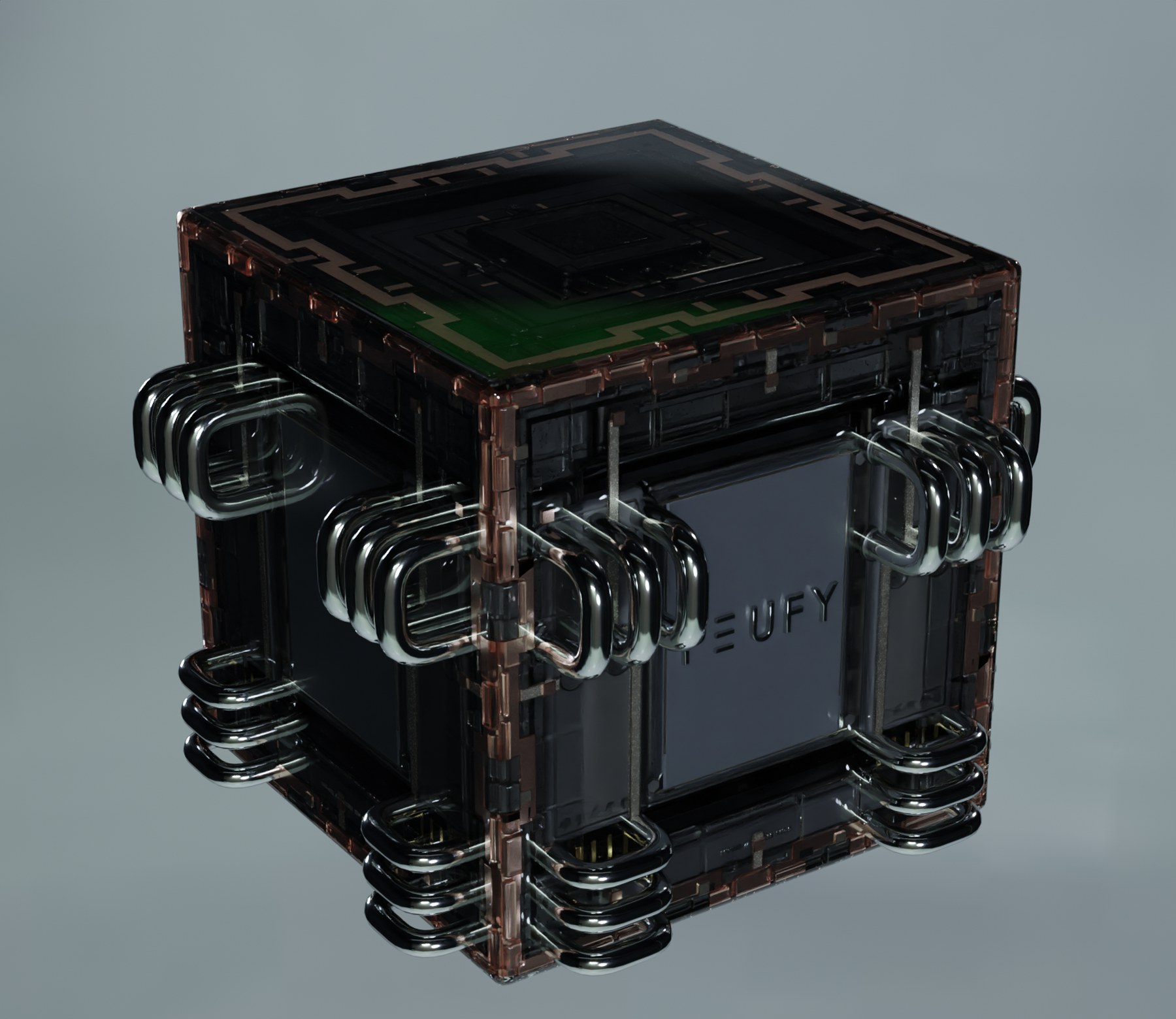
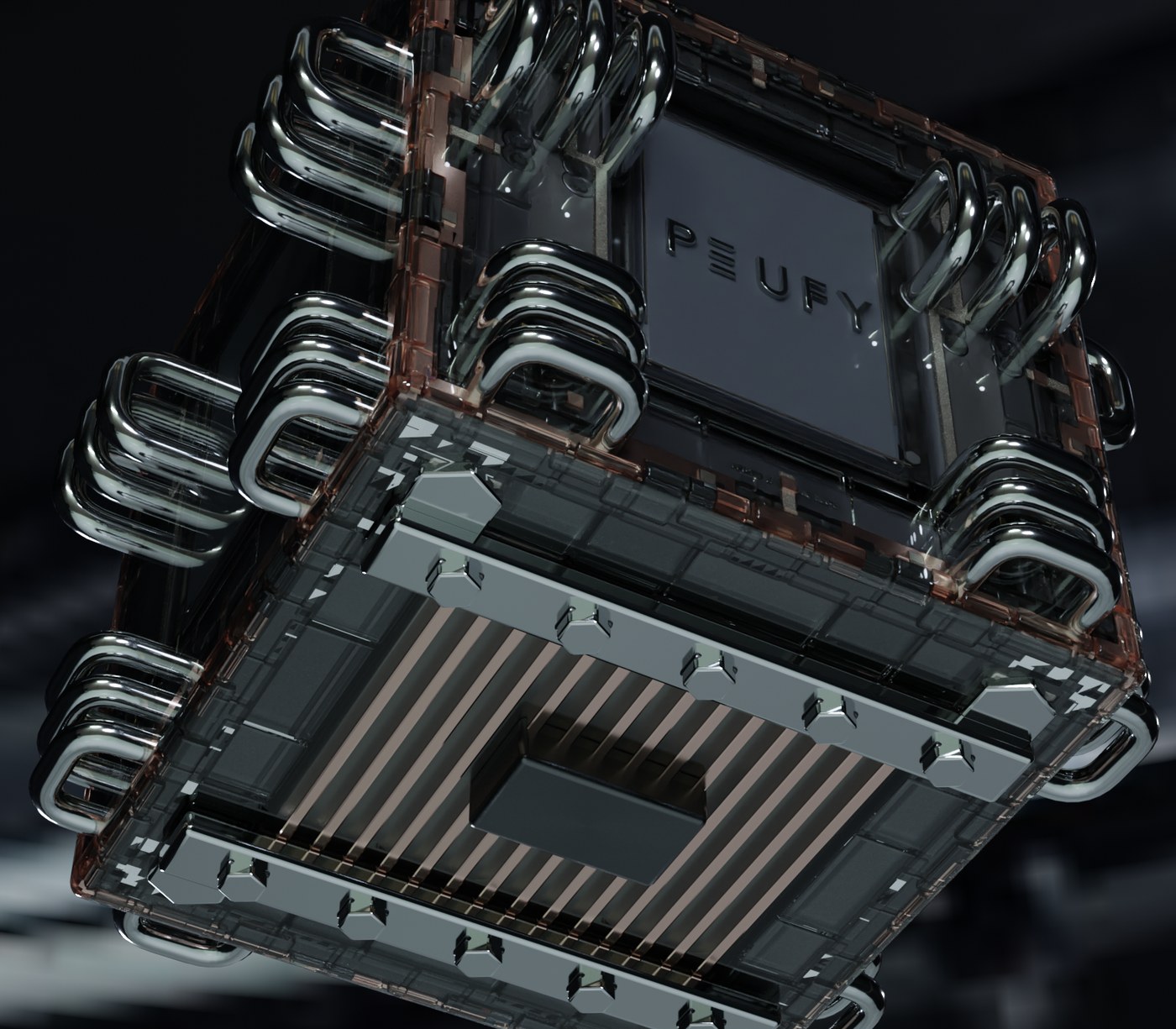
Path-traced in Cycles on OPTIX, lit by a studio HDRI alone — no lamps, no emissive geometry anywhere in the scene. Measured metal reflectance, procedural roughness breakup and refractive caustics through the casting.
Construction
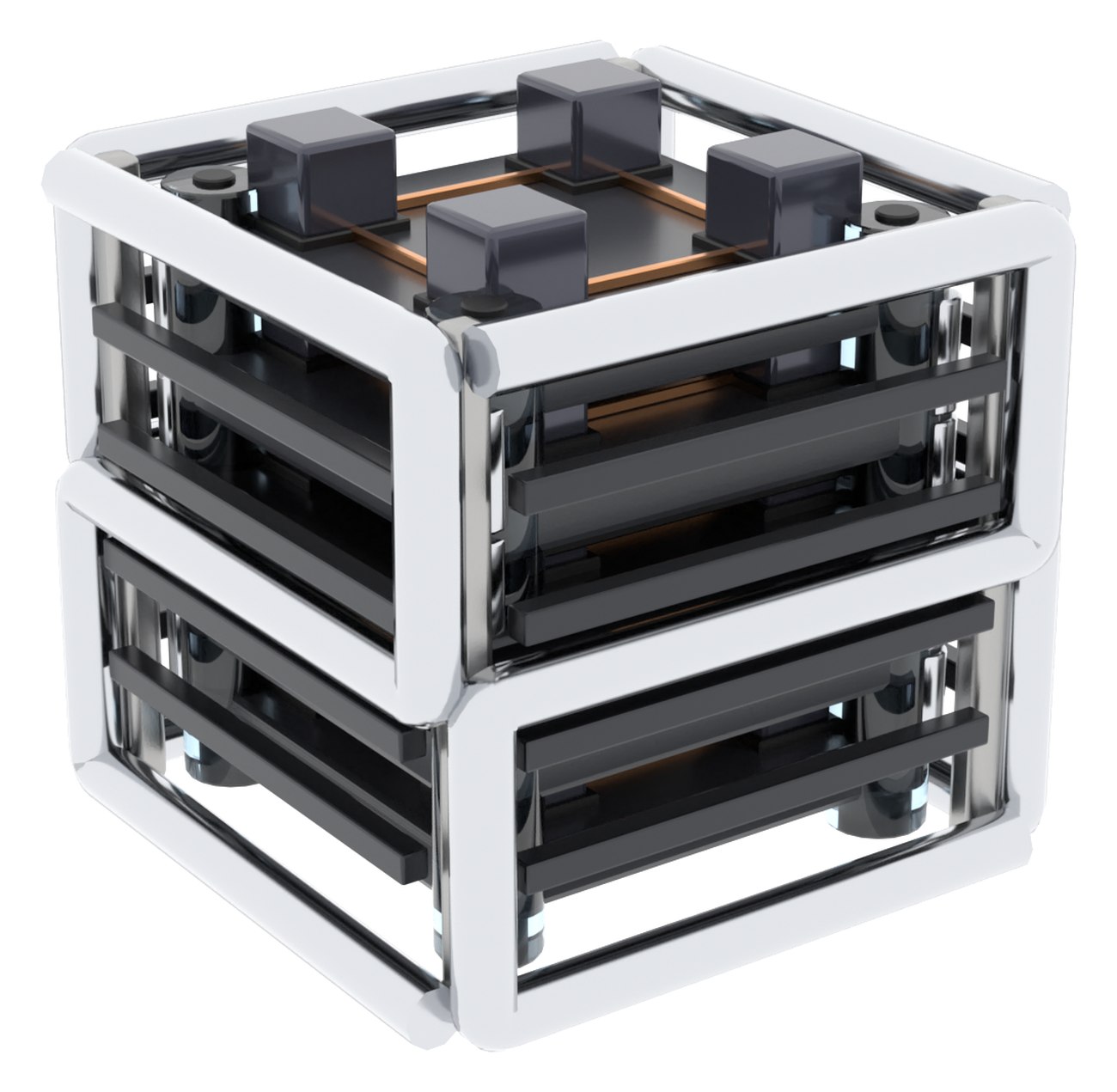
The module is built as a real product would be: an optical outer shell, a machined structural frame, and a dense computational core — each with its own material behaviour, tolerances and service features.
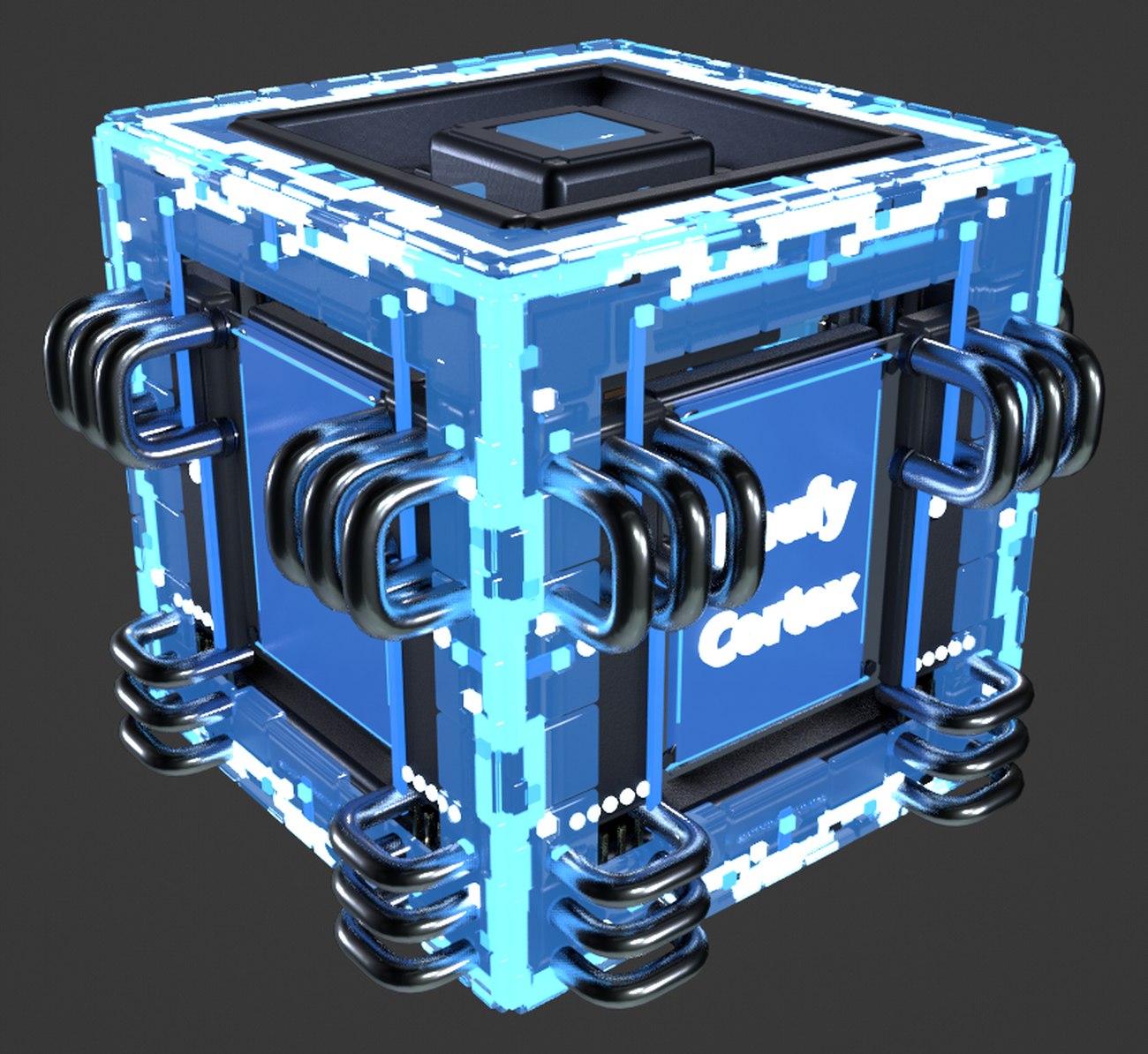
Low-iron optical glass, IOR 1.52, polished to a single continuous skin — colourless rather than the green-edged cast of ordinary soda-lime glass. Stepped cladding blocks are suspended inside the casting so the outer plane stays optically clean.
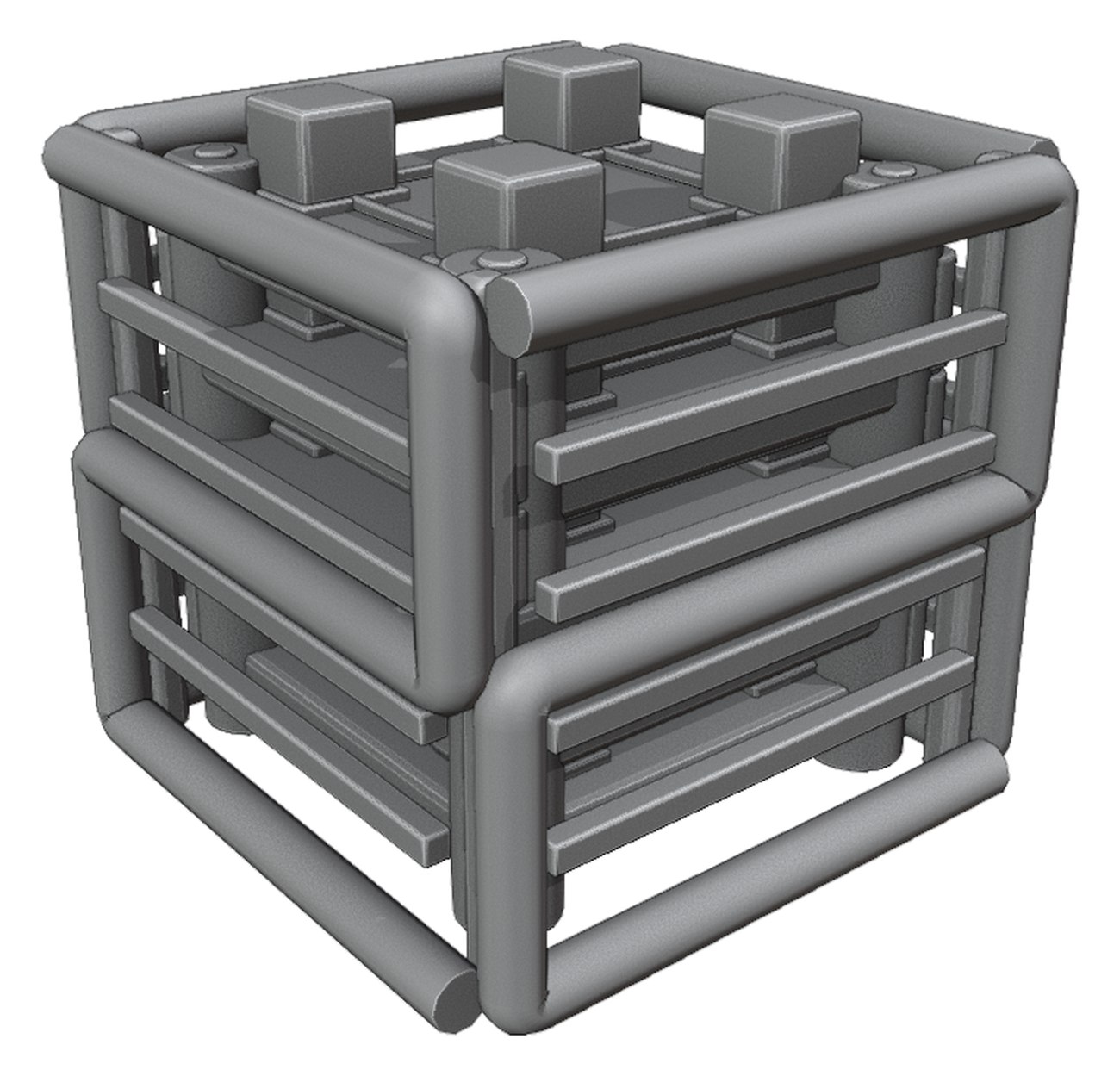
Dark anodised aluminium rim frames, twelve machined edge beams and titanium corner brackets. Metals use measured F0 reflectance; brushed grain, bead blast and roughness variation are procedural, so they hold up at macro distance.
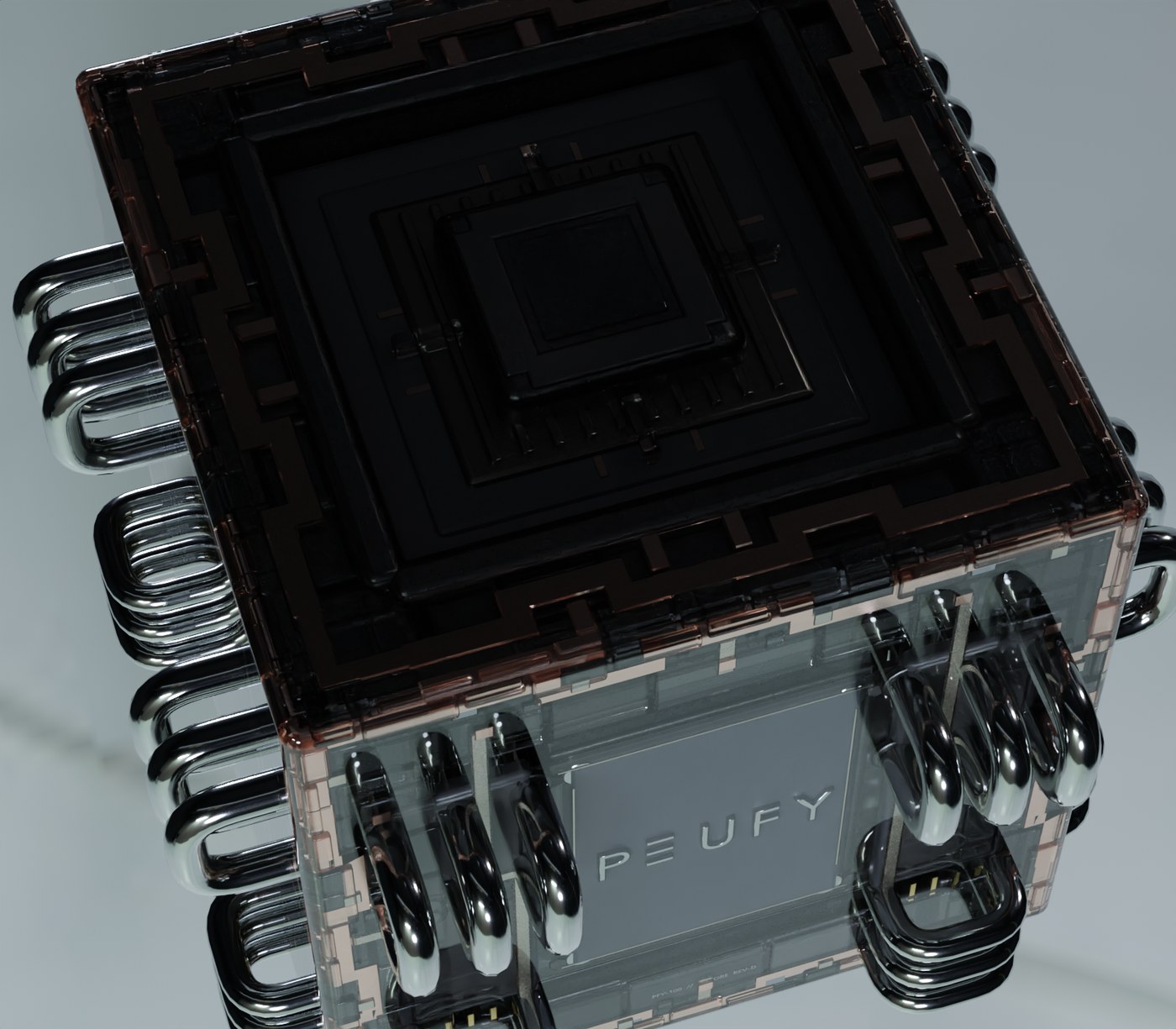
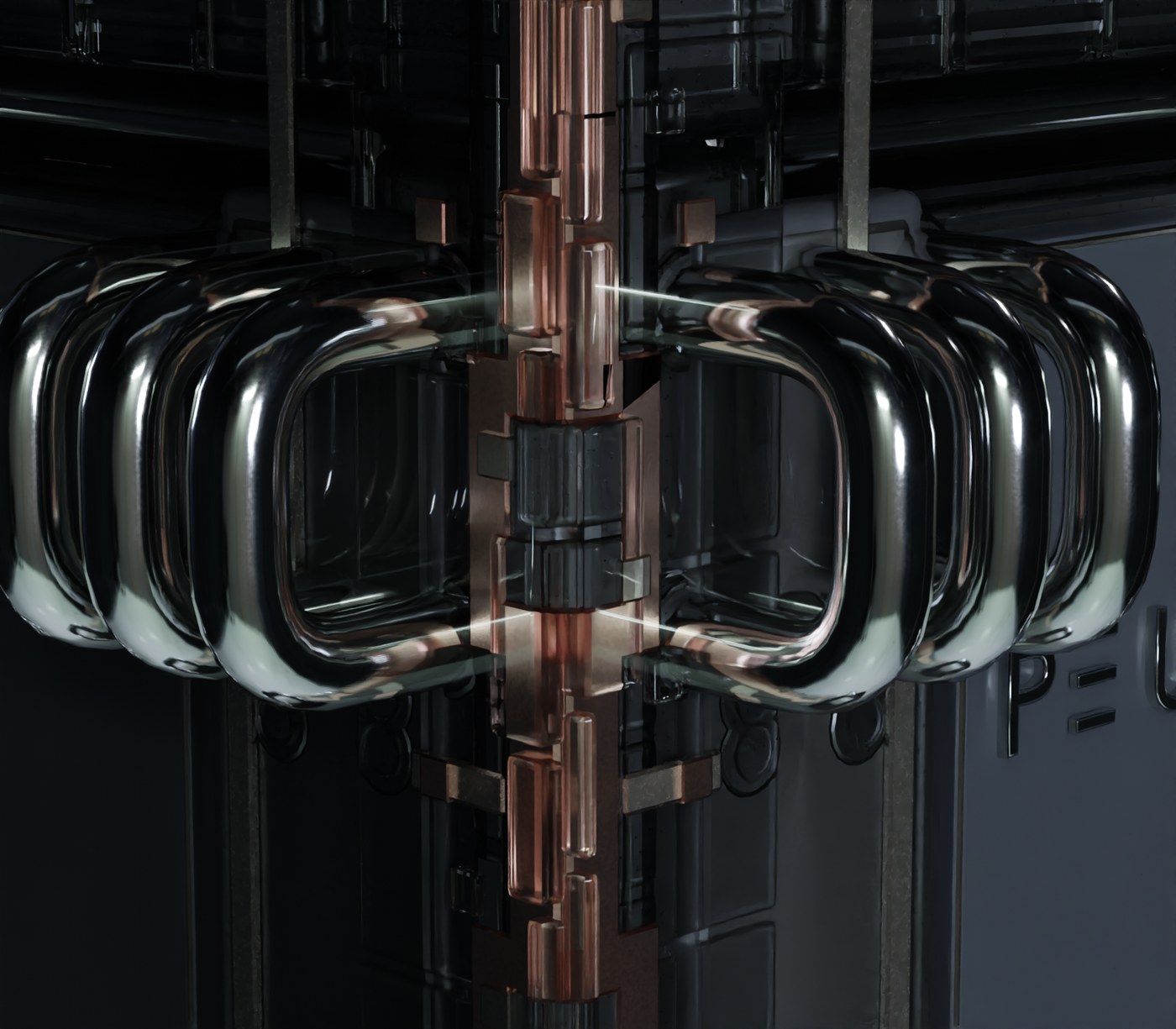
Five stacked processor plates in carbon, ceramic and graphene, carrying twenty silicon dies, a copper data-bus lattice, four fused-silica waveguides at the true 1.4585 index of optical fibre, and a stainless liquid cooling loop.
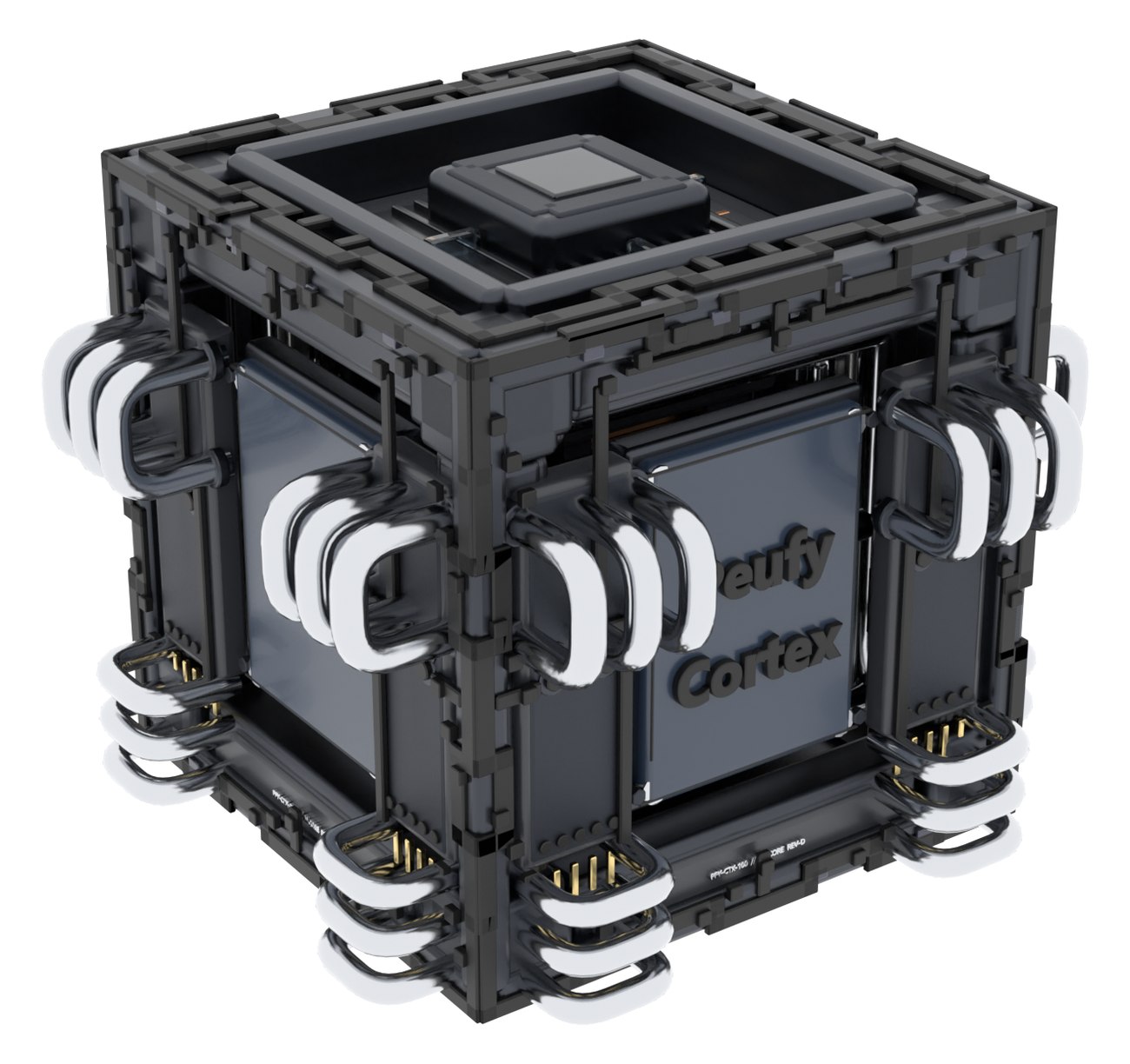
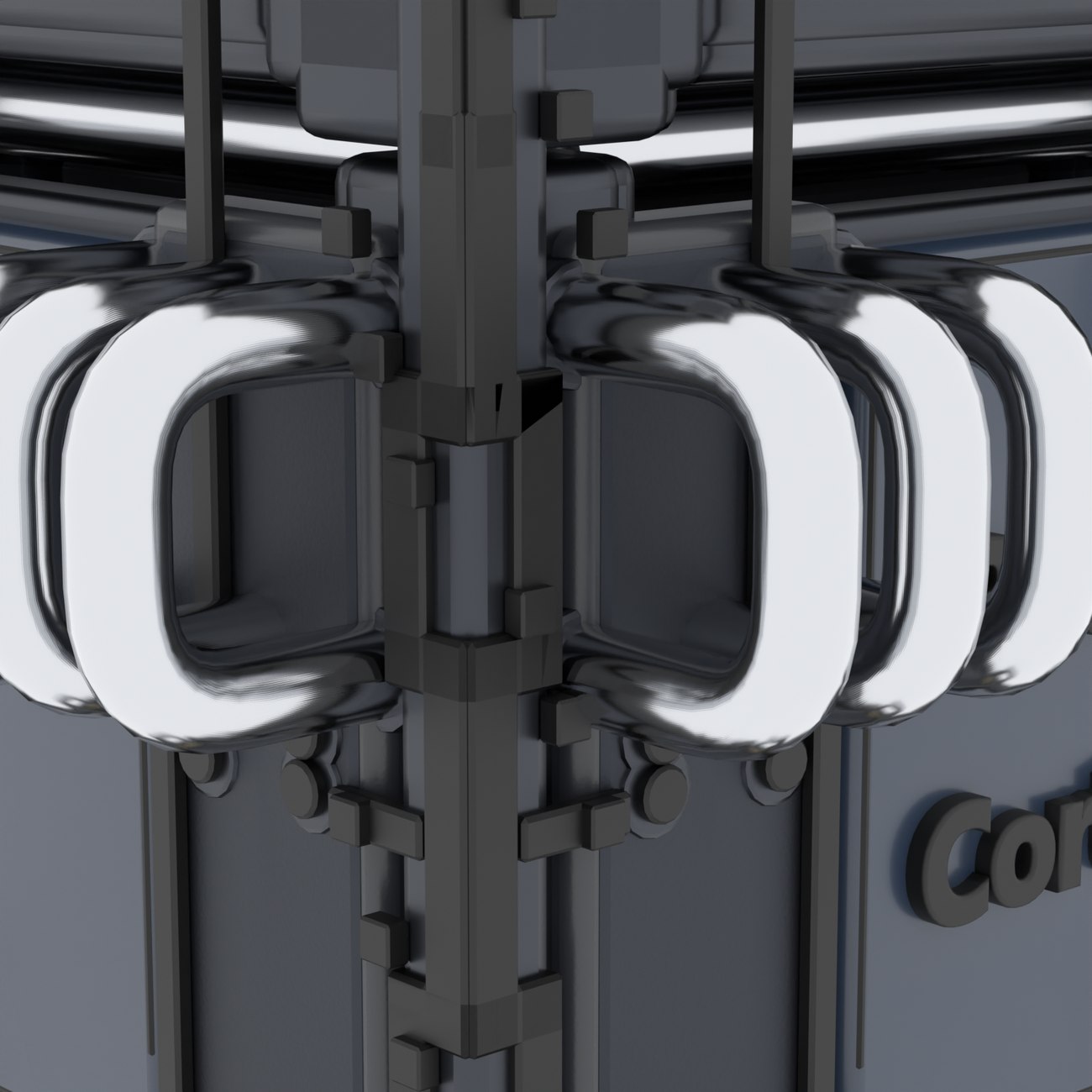
Sixteen banks of machined stainless steel connector staples with filleted bends, seated in sealed pass-through bosses. Every face carries an identical bank — the module is orientation-agnostic in a rack.
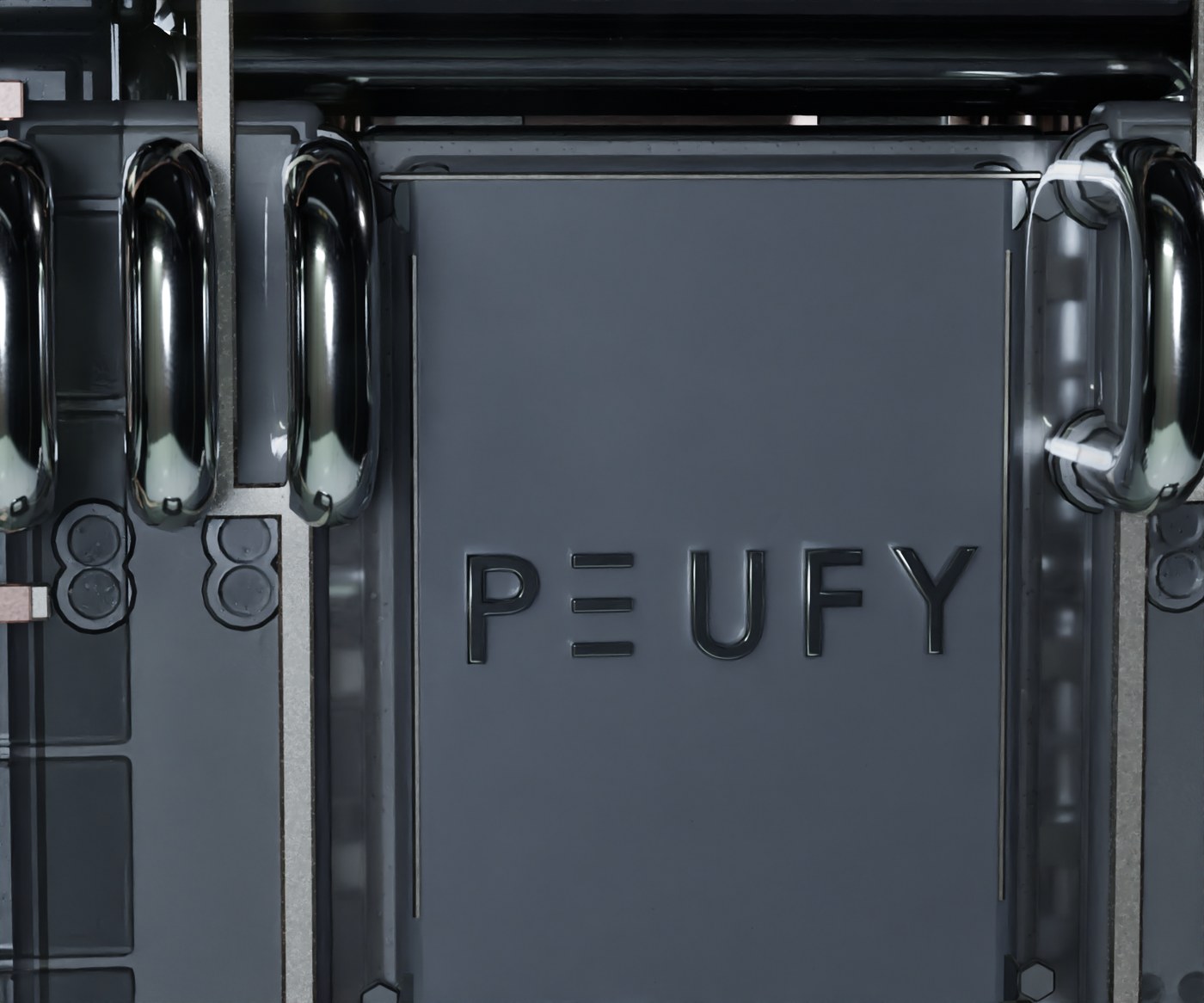
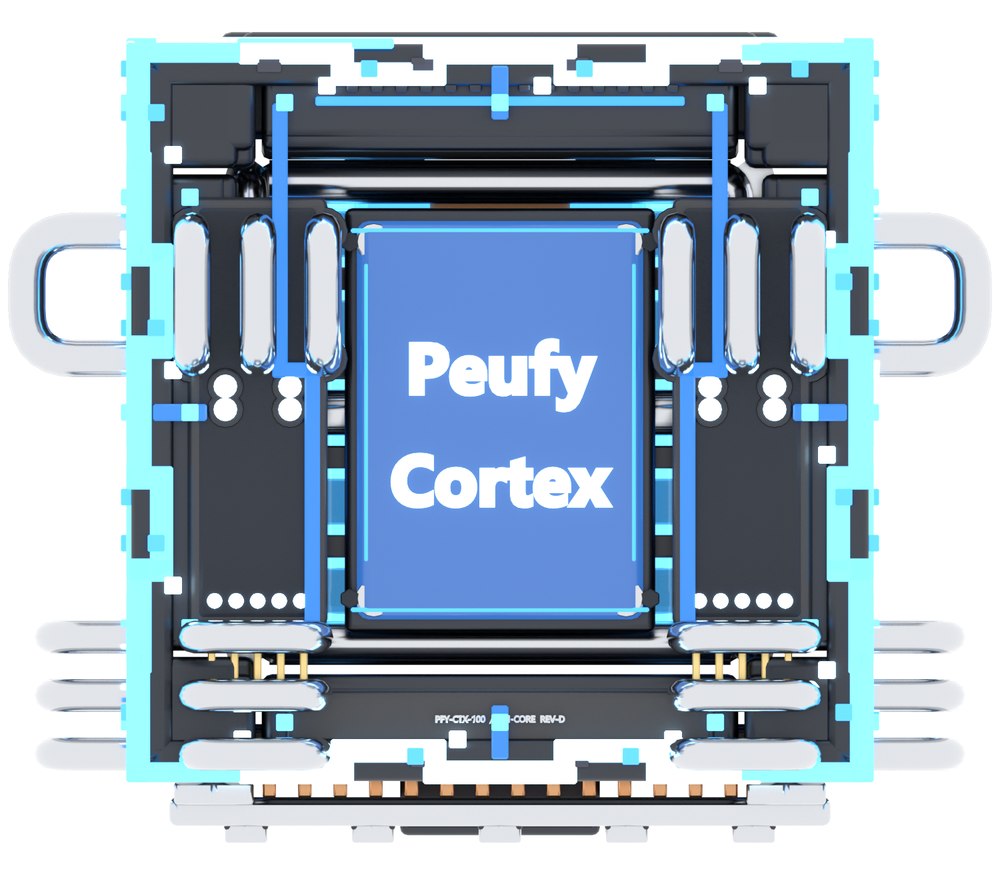
Captive corner screws, precision panel bezels, slot vent banks, fibre-optic service ports, micro sensor rows, gold contact buses and laser-engraved serial markings. The PEUFY wordmark is a raised polished inlay.
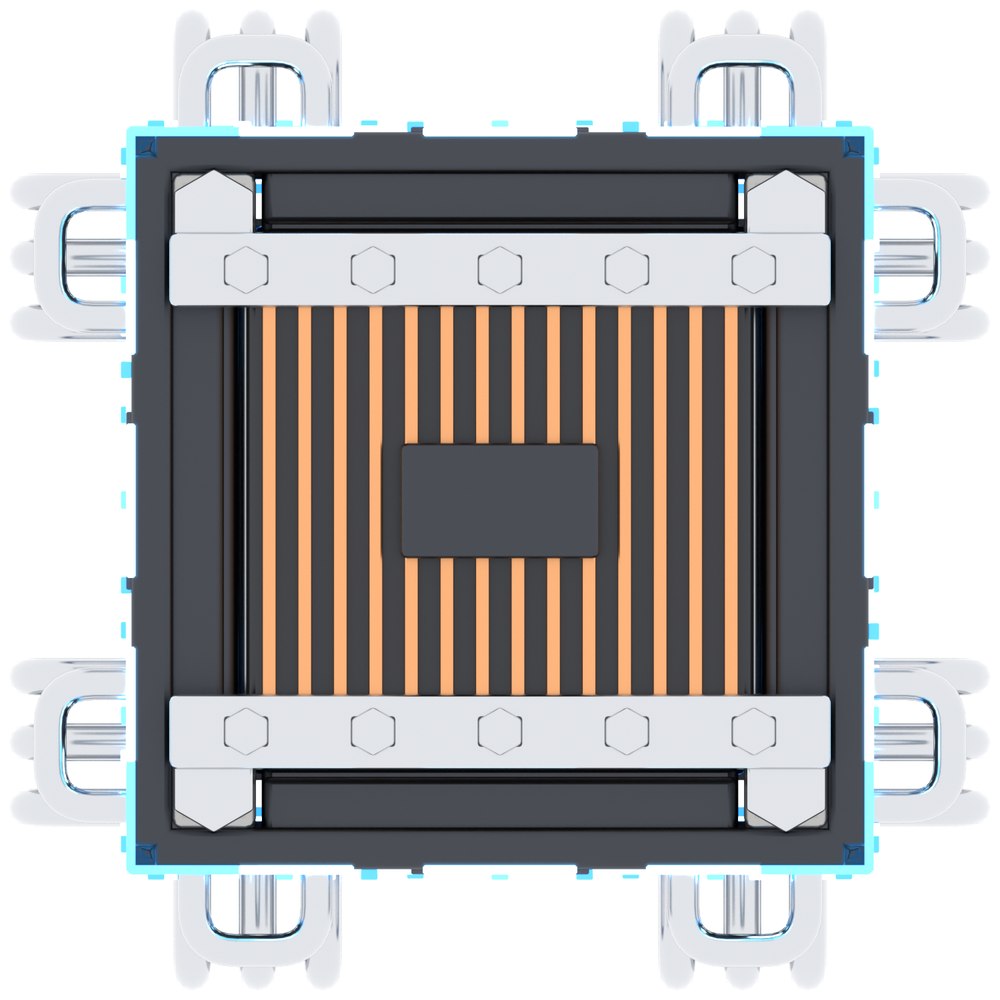
The module stands on two slotted stainless rails over a graphene cold plate with a fourteen-fin copper array, a concealed twenty-two pin power/data connector and four titanium attachment lugs.
Specification
Modelled at true scale with believable tolerances and panel gaps. No booleans anywhere — every slot is a fin array over a lit floor, every frame is a bar-and-corner assembly. Each face is authored once and placed by a face matrix, so four-fold symmetry is exact rather than approximate.
Cycles
Path-traced in Cycles on OPTIX, lit by a studio HDRI alone — no lamps, no emissive geometry anywhere in the scene. Measured metal reflectance, procedural roughness breakup and refractive caustics through the casting.
Inspection
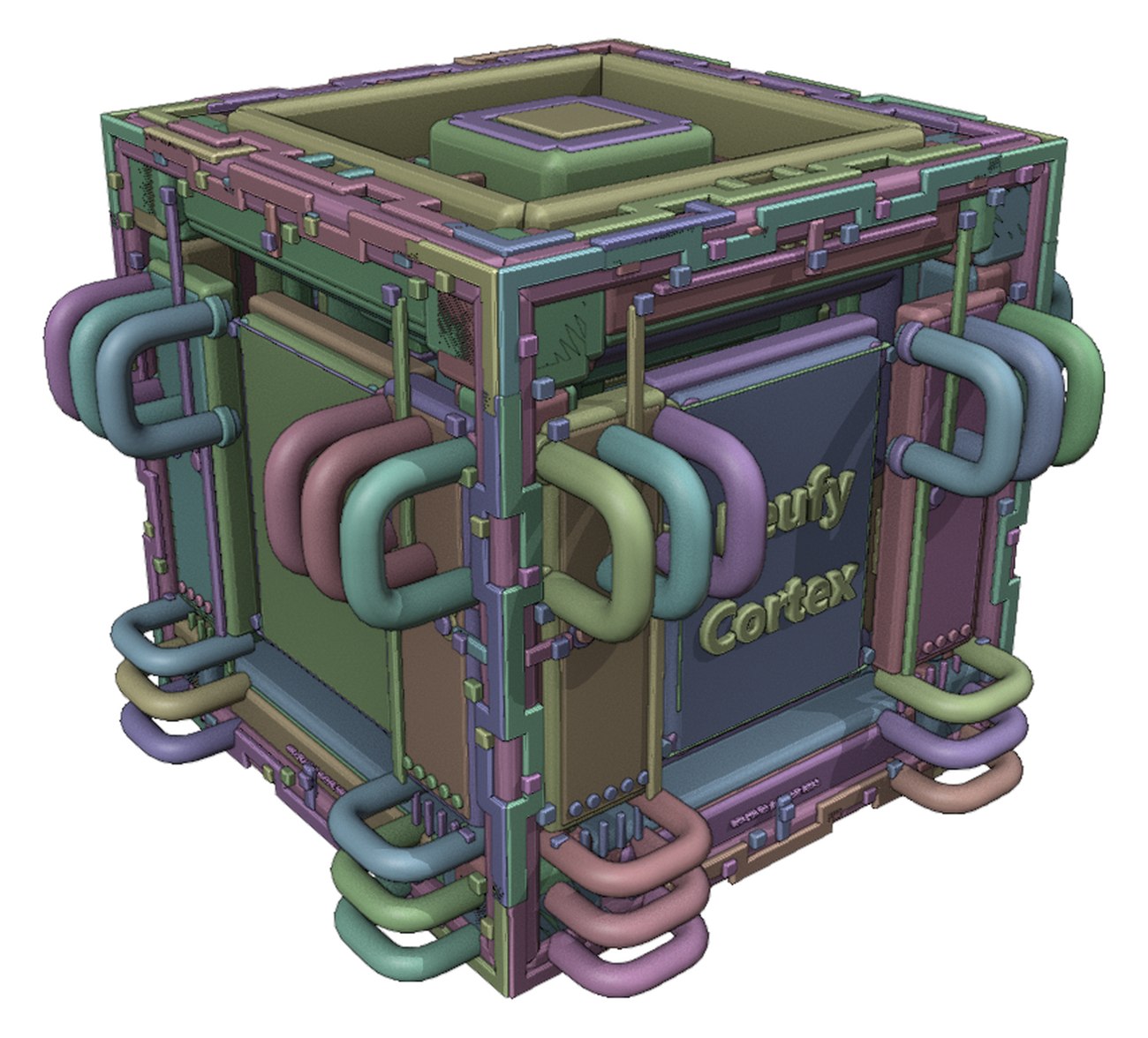
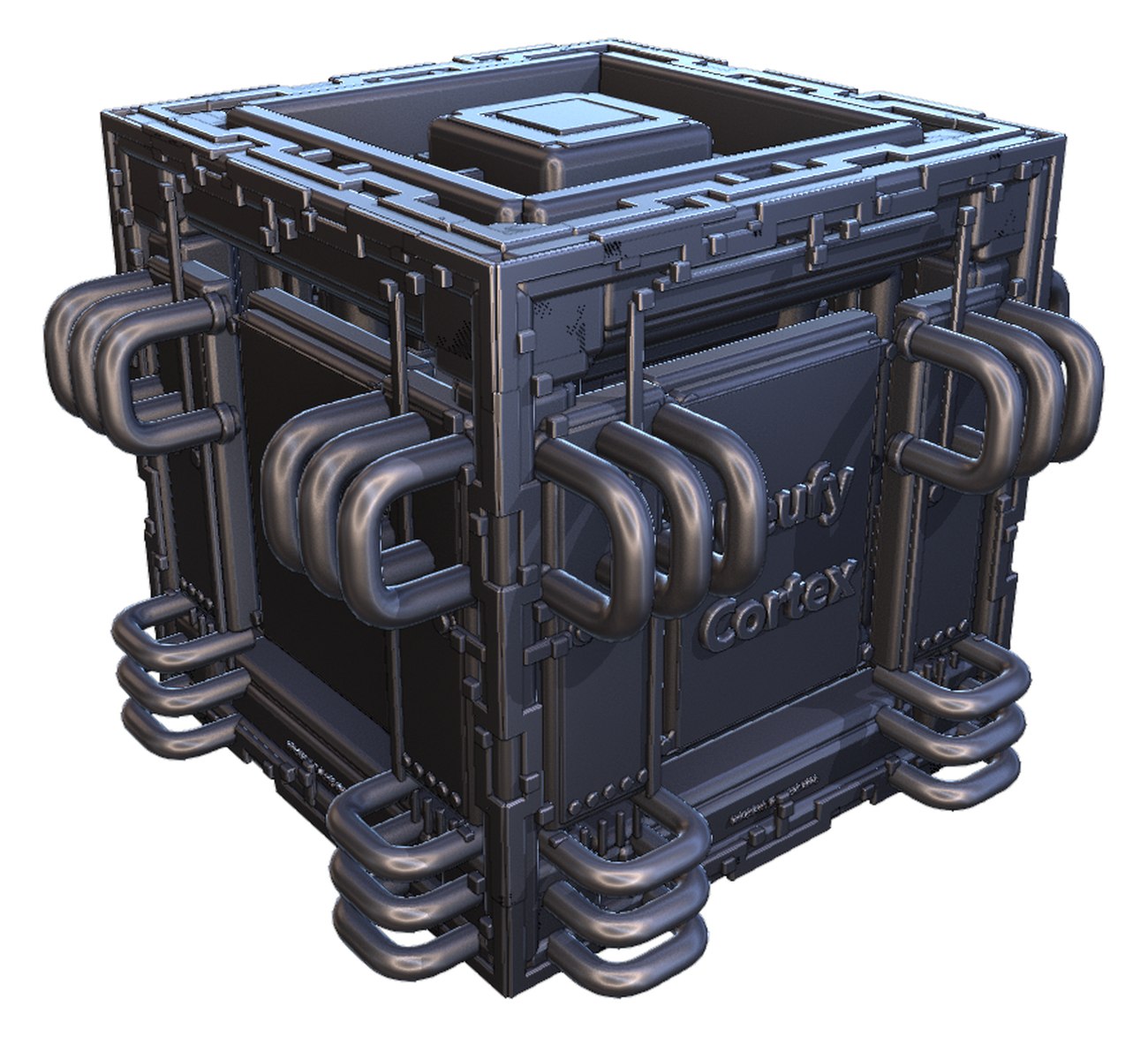
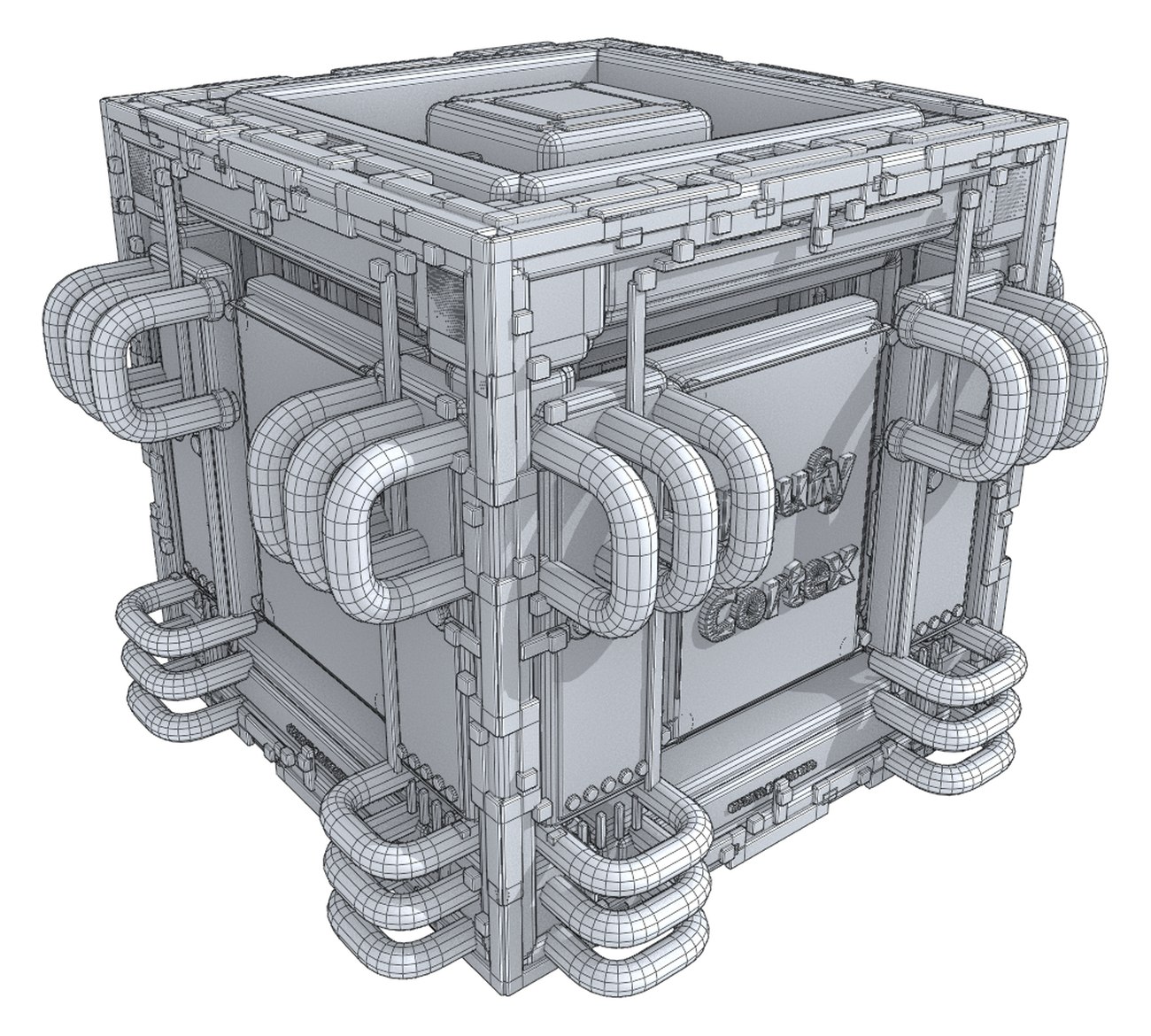
The same five views available in the Blender viewport, captured straight from it. Use the SURFACE control in the viewer above to switch the live model between material, colours, metal and mesh.
Surfaces
Rendered with every emissive set to zero and a flat white world — no rim light, no bloom, no film curve. Nothing is hidden behind glow, so the anodised aluminium, stainless, titanium, copper, gold, ceramic, carbon fibre, graphene and silicon read as they actually are.
Drawings
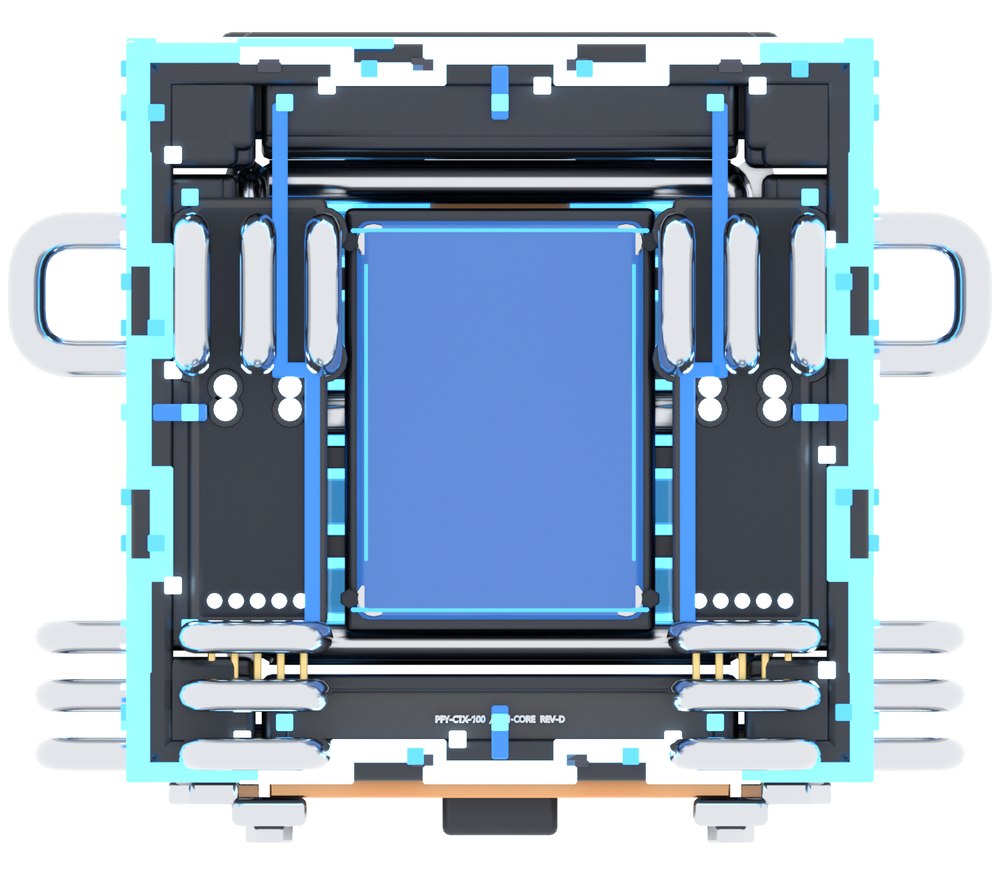
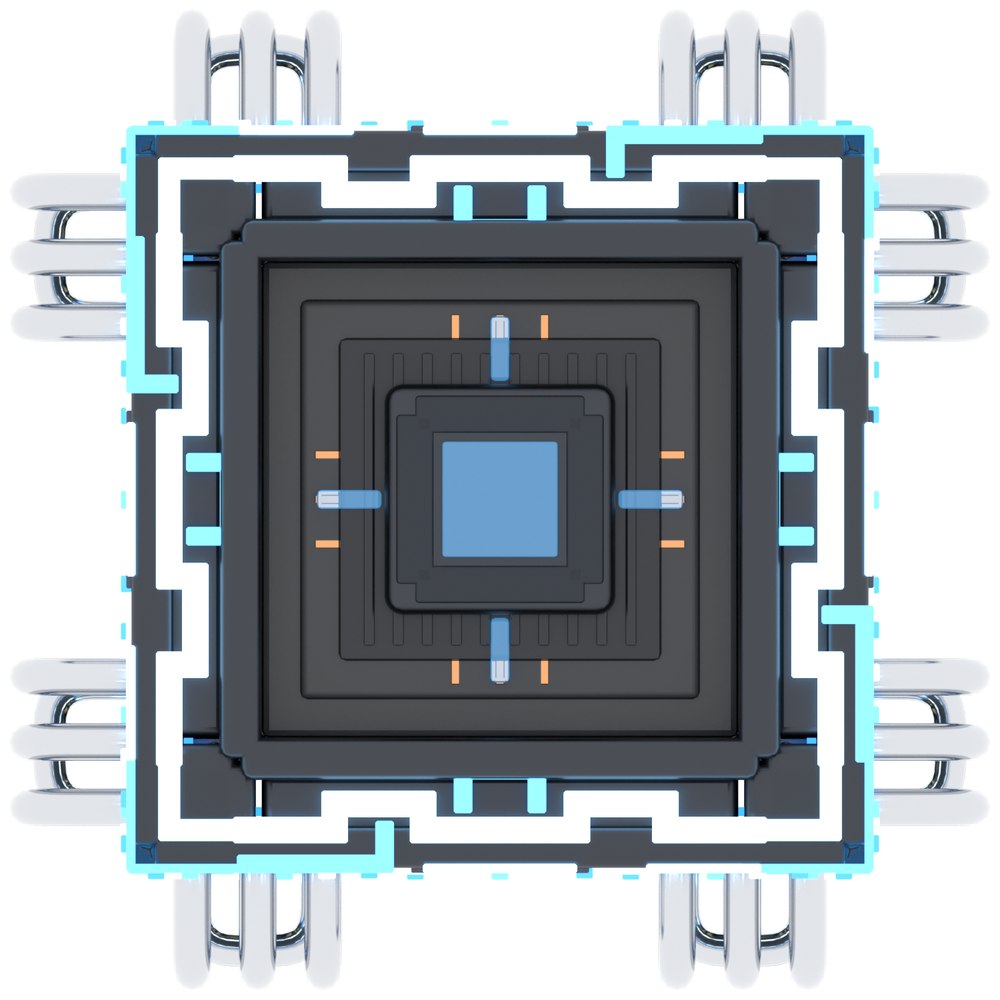
True technical projections with no perspective distortion — the four principal views of the 100 mm envelope, casing hidden.
Assets
The scene is fully reproducible — the Python build scripts regenerate the entire asset deterministically, so any dimension is a one-line change.